The control plane
One brain.
A visible system.
ReleaseWitness keeps planning and execution connected through small, inspectable contracts rather than hidden orchestration.
Layers
Compact, source-anchored context helps agents find the right files without rereading the whole repository.
JSON is the machine-readable source of truth for status, dependencies, owners, scopes, evidence and reports.
Markdown assignments, reports and completed logs make each handover readable by any compatible runtime.
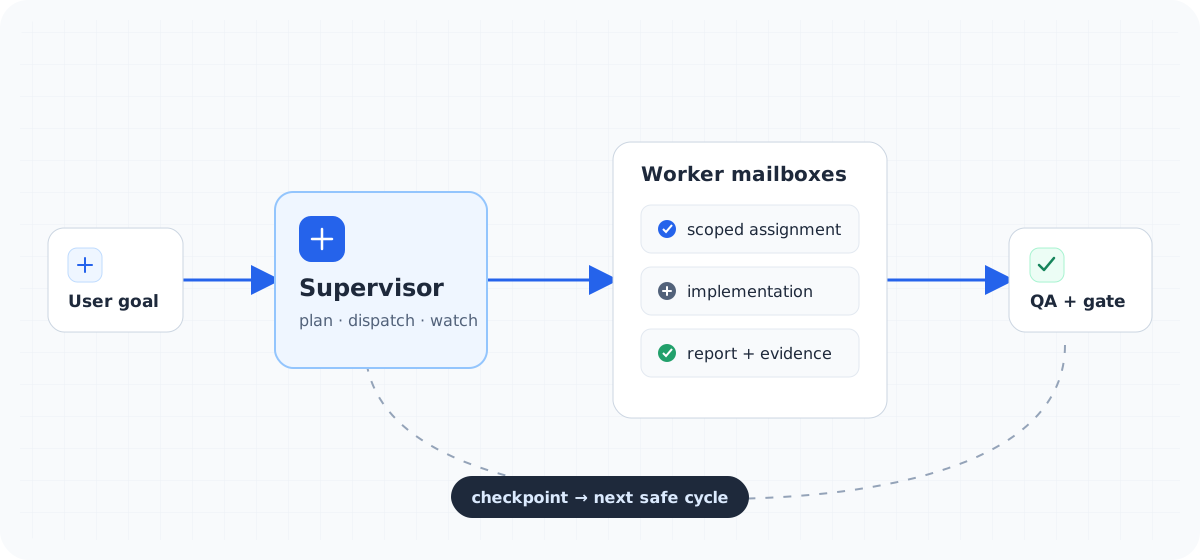
A bounded cycle ingests reports, dispatches ready work, runs configured QA and writes a checkpoint.
The file protocol
User goal
    ↓
Supervisor → task registry → worker mailbox
    ↓                       ↓
plan + scope          pull + implement
    ↓                       ↓
production gate ← report + evidence
The CLI owns safe transitions and scope conflict checks. The model owns judgment: choosing a roadmap, understanding evidence and deciding the next bounded action.
Production gate
A task is not production-ready because a worker says “completed”. The supervisor needs acceptance evidence, passing checks, no open critical review finding and operational/rollback notes. Deployment remains an explicit user-authorized action.
Filesystem automation can create durable work; it must not silently launch arbitrary models, change secrets or deploy a product.
Tóm tắt bằng tiếng Việt
ReleaseWitness dùng knowledge ledger, registry JSON, mailbox Markdown và supervisor cycle hữu hạn. Worker chỉ sửa scope đã claim; report phải có file, lệnh kiểm tra, evidence và blocker. Supervisor review/QA trước khi đóng task.
See the operating loop